

Research Portfolio
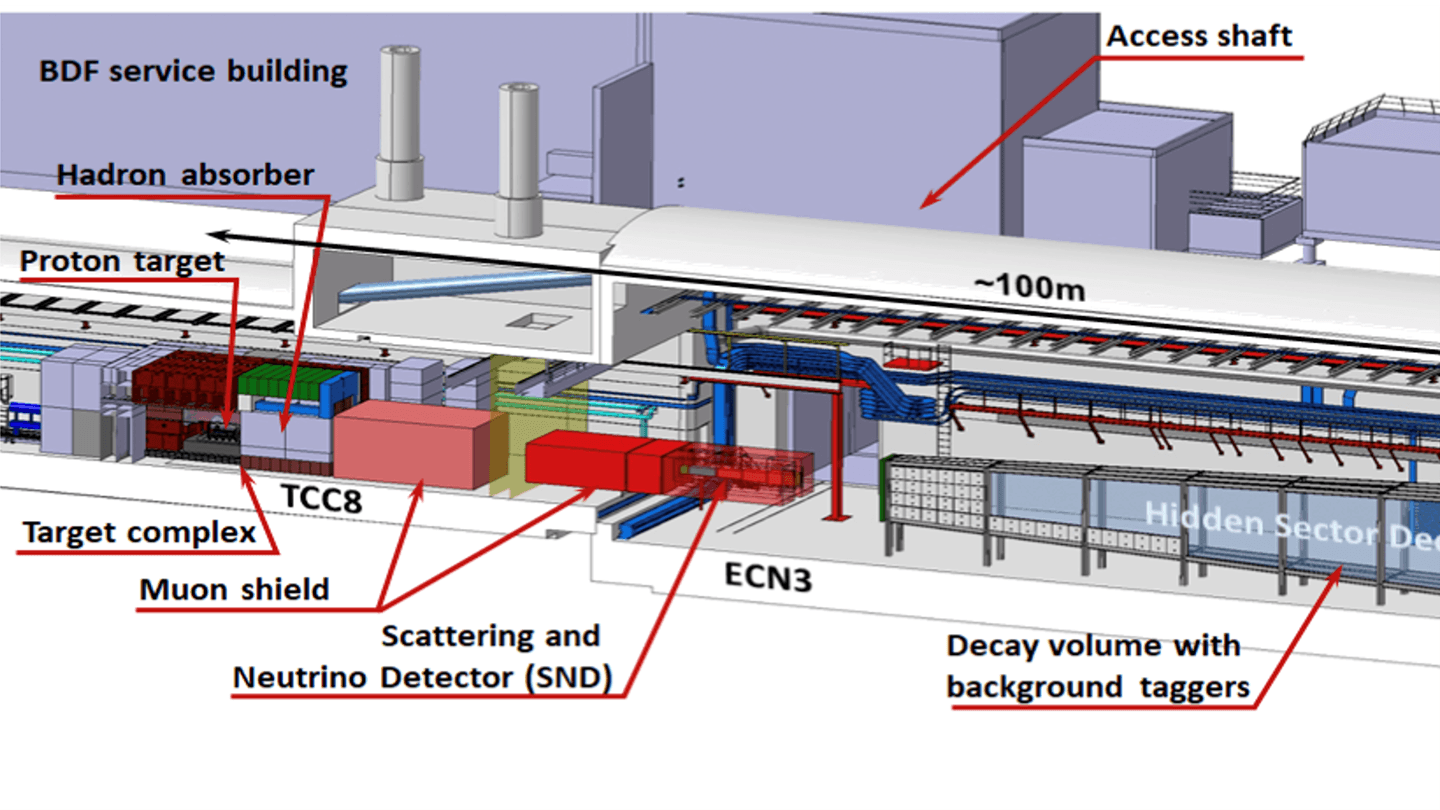
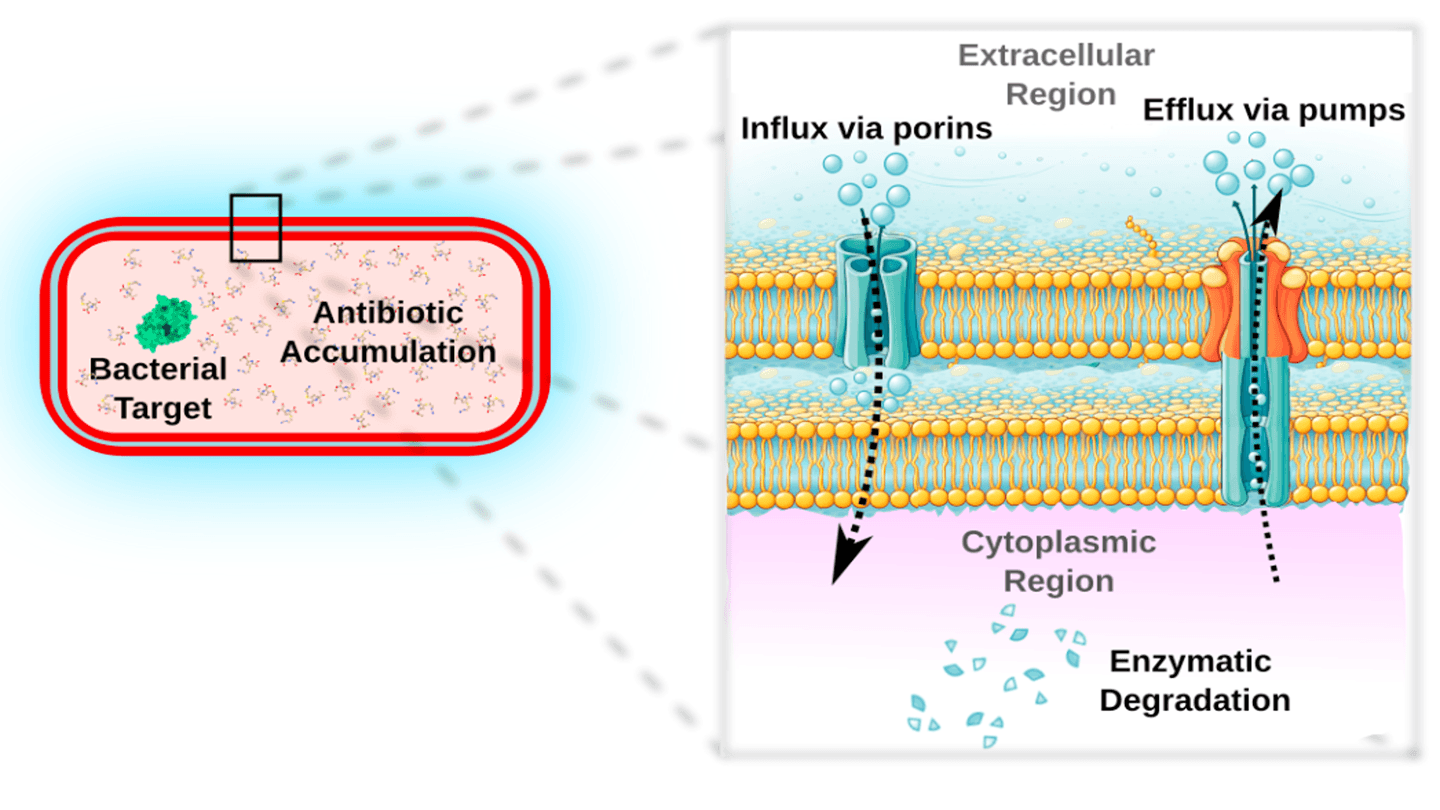
Prof. Ustyuzhanin’s core expertise lies in developing machine-learning methods that accelerate scientific discovery, which maps directly onto the Autonomous Science and AI Applications directions at Constructor Labs. For over two decades he has built AI systems that formulate and test hypotheses under the demanding constraints of real experimental science — from high-energy physics at CERN (the LHCb and SHiP experiments) to materials design, catalysis, quantum materials, and antibiotics discovery. This work spans the full autonomous-science loop: generative models that propose candidate structures, differentiable and surrogate-based optimization of experiments and detectors, anomaly detection for new-physics searches, and reproducible ML pipelines that make results auditable across large collaborations. These directions are backed by concrete outcomes rather than method work alone: as a member of the LHCb Collaboration he shares in the 2025 Breakthrough Prize in Fundamental Physics, his group’s methods have been adopted in experimental-physics workflows and open-source tooling, and he continues to lead international, cross-disciplinary collaborations — including current work as a Visiting Research Professor at the National University of Singapore (I-FIM) and as coordinator of the Materials Science Working Group in the EU Horizon Europe project SCIANCE (Strategic Coordination of AI-enabled Science in Europe).
His relevance to the EdTech direction is direct and long-standing. As Director of AI Research at Constructor Knowledge, his work targets Personalized Knowledge Transmission and Human–AI Co-Cognition / TeachingAI — systems that turn expert knowledge into adaptive learning artifacts and interfaces where AI agents can explain their reasoning and discoveries to learners. This builds on years of designing and teaching graduate ML curricula, founding and running research-education labs, and mentoring students who now work across academia and industry. He approaches education the same way he approaches science: as a problem of transmitting complex, evolving knowledge efficiently and verifiably to a human on the other side.
What ties these threads together — and what he brings to Constructor Labs specifically — is the conviction that autonomous science and personalized education are two sides of the same challenge: building AI that reasons about a domain well enough to both advance it and teach it. His contributions aim to make that loop concrete, so that the same systems which help discover new physics or materials can also explain those discoveries to the next generation of students and researchers.
Autonomous Science
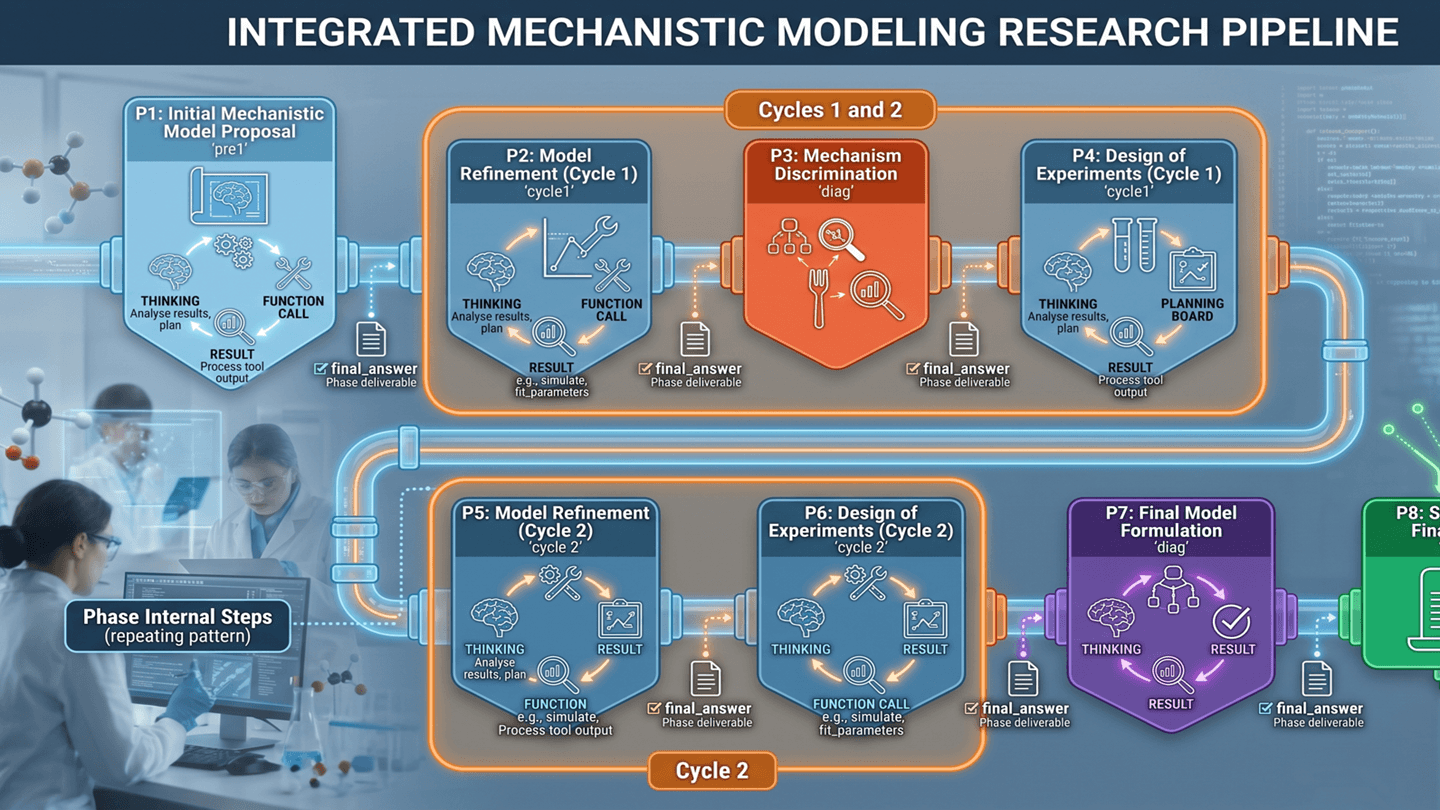
Investigates end-to-end AI systems capable of conducting scientific work with progressively decreasing human supervision – from literature synthesis and hypothesis generation to experiment design, execution, and writing. The direction subsumes two foundational sub-layers: (a) machine-actionable representations of the scientific body of knowledge – temporal hypergraphs, applicability constraints, formalism-based clustering – that give agents a substrate for structural reasoning beyond context windows; and (b) competence-aware models of human and machine expertise (cognitive twins, competence hypergraphs) enabling autonomous agents to locate, combine, and complement capabilities across a research ecosystem.
Personalized Knowledge Transmission and Adaptive Education
Explores how rationale-aware AI systems can transform expert knowledge into highly personalized educational artifacts – courses, lectures, explanations – tailored to learner profiles and pedagogical goals. Targets the full pipeline from source material to learner: extracting the latent semantic and didactic flow of a domain, encoding instructor intent and meta-cognitive scaffolding, and generating adaptive content that compresses revision cycles from weeks to days across math, programming, and the sciences.
Human–AI Co-Cognition and TeachingAI
Studies the interface layer where autonomous scientific agents meet human researchers, instructors, and students – through navigable cognitive maps, spatial knowledge landscapes, and avatar-mediated dialogue. A central motif is TeachingAI: as autonomous science advances faster than humans can follow, AI systems must explain their own results – reconstructing the rationale, surfacing prerequisites, and adapting the depth of explanation to the listener – so that the gap between machine-generated discovery and human comprehension does not widen indefinitely. The direction investigates dual-view representations (coarse-grained human exploration + fine-grained agent retrieval as projections of one substrate), shared cognitive maps for collaborative reasoning, and protocols for trust, attribution, and intent transfer between humans and their AI co-workers and AI tutors.
- Measurement of the B s 0 → μ + μ − Branching Fraction and Search for B 0 → μ + μ − Decays at the LHCb Experiment
- Reproducible Experiment Platform
- Disk storage management for LHCb based on Data Popularity estimator
- Search for the lepton flavour violating decay tau(-) -> mu(-)mu(+)mu(-)
- A genetic algorithm for autonomous navigation in partially observable domain
- Machine learning code snippets semantic classification
- Toward the end-to-end optimization of particle physics instruments with differentiable programming
- Symbolic expression generation via variational auto-encoder
- Code4ML: a large-scale dataset of annotated Machine Learning code
- The Tracking Machine Learning Challenge: Throughput Phase
- Generative Models for Fast Simulation
- NFAD: fixing anomaly detection using normalizing flows
- The Tracking Machine Learning challenge : Throughput phase
- Generalization of Change-Point Detection in Time Series Data Based on Direct Density Ratio Estimation
- Segmentation of EM showers for neutrino experiments with deep graph neural networks
- Online detection of failures generated by storage simulator
- Toward Machine Learning Optimization of Experimental Design
- Adaptive divergence for rapid adversarial optimization
- SANgo: a storage infrastructure simulator with reinforcement learning support
- Rodin, A., Olsen, B. A., Ustyuzhanin, A., & Maevskiy, A. Time-local stochastic equation of motion for solid ionic electrolytes In: Physical Review Research 7.3 (2025): 033120. Date of publication: 4 August, 2025 DOI: https://doi.org/10.1103/jnzr-q953
- M. Y. Lukianov, A. Maevskiy, A. Ustyuzhanin et al. Inverse design of broadband antennas for terahertz devices based on two-dimensional materials In: APS, Physical Review Applied, 24(5), 054079. Date of publication: 25 November, 2025 DOI: https://doi.org/10.1103/gr2z-3qjp
Publications on Scopus
- Artificial Intelligence for Multiscale Modeling in Solid-State Physics and Chemistry: A Comprehensive Review
- Symbolic regression for defect interactions in 2D materials
- Wyckoff Transformer: Generation of Symmetric Crystals
- Strain-induced crumpling of graphene oxide lamellas to achieve fast and selective transport of H2 and CO2
- Predicting ionic conductivity in solids from the machine-learned potential energy landscape
- Artificial intelligence for advanced functional materials: exploring current and future directions
- Towards invertible 2D crystal structure representation for efficient downstream task execution
- Engineering Point Defects in MoS for Tailored Material Properties Using Large Language Models
- EAGLEEYE: Attention to Unveil Malicious Event Sequences from Provenance Graphs
- Linguacodus: a synergistic framework for transformative code generation in machine learning pipelines
- Review on automated 2D material design
- Beyond dynamics: learning to discover conservation principles
- Machine learning code snippets semantic classification
- Sparse representation for machine learning the properties of defects in 2D materials
- Author Correction: Unveiling the complex structure-property correlation of defects in 2D materials based on high throughput datasets (npj 2D Materials and Applications, (2023), 7, 1, (6), 10.1038/s41699-023-00369-1)
- Code4ML: a large-scale dataset of annotated Machine Learning code
- Symbolic expression generation via variational auto-encoder
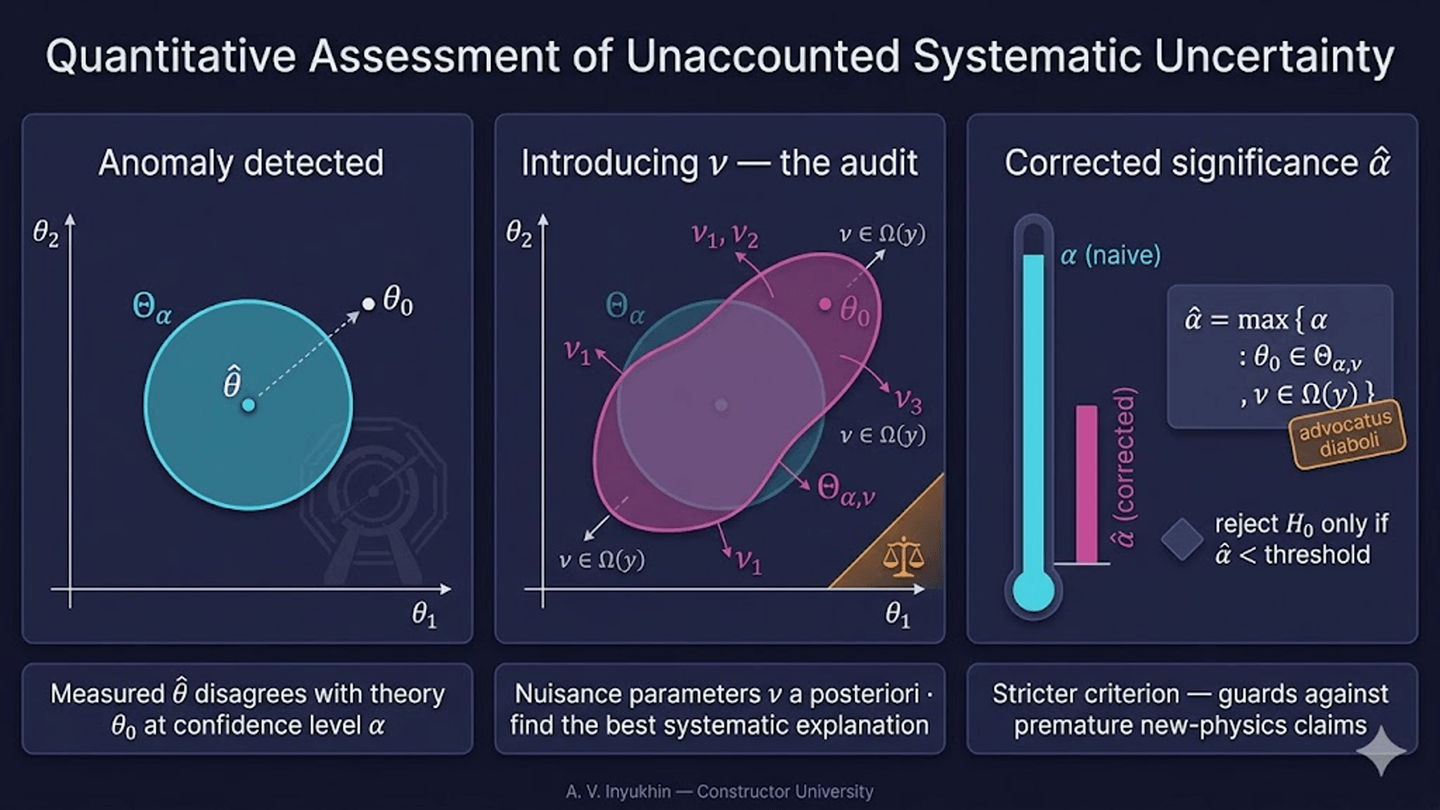
- The DL Advocate: playing the devil’s advocate with hidden systematic uncertainties
- Toward the end-to-end optimization of particle physics instruments with differentiable programming

Lazar Kovacevic
Research Engineer
Works on knowledge graphs for education and science, building the pipeline that turns lecture and paper corpora into structured representations — annotation, entity resolution, graph repair, and export for embedding and link prediction. Current work covers personalized course generation over the teaching view, including learner-profile path planning and automated evaluation of generated instructional material.
Dr. Ekaterina Trofimova
Postdoctoral Researcher
Postdoctoral Fellow, Constructor Labs (CL)
Expertise spans knowledge discovery in scientific literature, large language model evaluation, and multi-agent systems for automated research workflows. Current work centres on the Temporal Knowledge Hypergraph, a provenance-tracked representation of scientific methods organised around applicability and formalism. A parallel thread builds the benchmarks and hallucination-detection methods needed to test whether retrieval-augmented systems attribute scientific claims to verified sources and respect temporal cutoffs.
Aleksandr Shumilov
PhD student / Junior Researcher
Specializes in structural bioinformatics and computational biology. Current work develops an AI-scientist system — agents that generate hypotheses, run simulations and discover governing equations from data — and applies it to semiconductor device physics, explaining charge transport in reconfigurable nonlinear-processing units.
Mark Zaretskii
PhD Student / Junior Researcher
Research interests lie at the intersection of AI, chemoinformatics, and materials science, with current projects focusing on the development of AI tools and pipelines that can accelerate the identification and prioritization of promising molecules and materials for drug design and neuromorphic electronics, respectively.
Dr. Maxim Borisyak
Postdoctoral Fellow
Expertise spans machine learning for the natural sciences, including deep-learning surrogates, generative models, simulation-based black-box optimization, hybrid mechanistic models, and Bayesian optimal experimental design. Earlier work applied these methods to automated bioprocess development and self-driving laboratories, and to large-scale experimental physics at CERN, where he is a member of the SHiP collaboration and formerly of LHCb. Current work concerns the co-design of scientific instruments and their inference models, and design of experiments for autonomous experimentation within the ARIA-funded MIND-MATTER project.
Eduard Izgorodin
Research Consultant (Knowledge Discovery Program)
Works on the structure of large knowledge systems: how scientific concepts organise into hierarchies, and whether notions like “level of abstraction” hold up as measurable quantities when tested against real reference systems such as ACM CCS and MeSH. Current work on the Knowledge Discovery program combines this with methodology for making such claims verifiable: pre-registered experiments, exact computation in place of estimation, and adversarial review. He also leads Mnemoverse (mnemoverse.com), an independent research program on memory systems for AI agents, and is the author of arXiv:2603.08965 on spectral methods for knowledge-graph abstraction.