The challenge
- Antimicrobial resistance (AMR) is a global health crisis; the antibiotic pipeline is critically underpopulated.
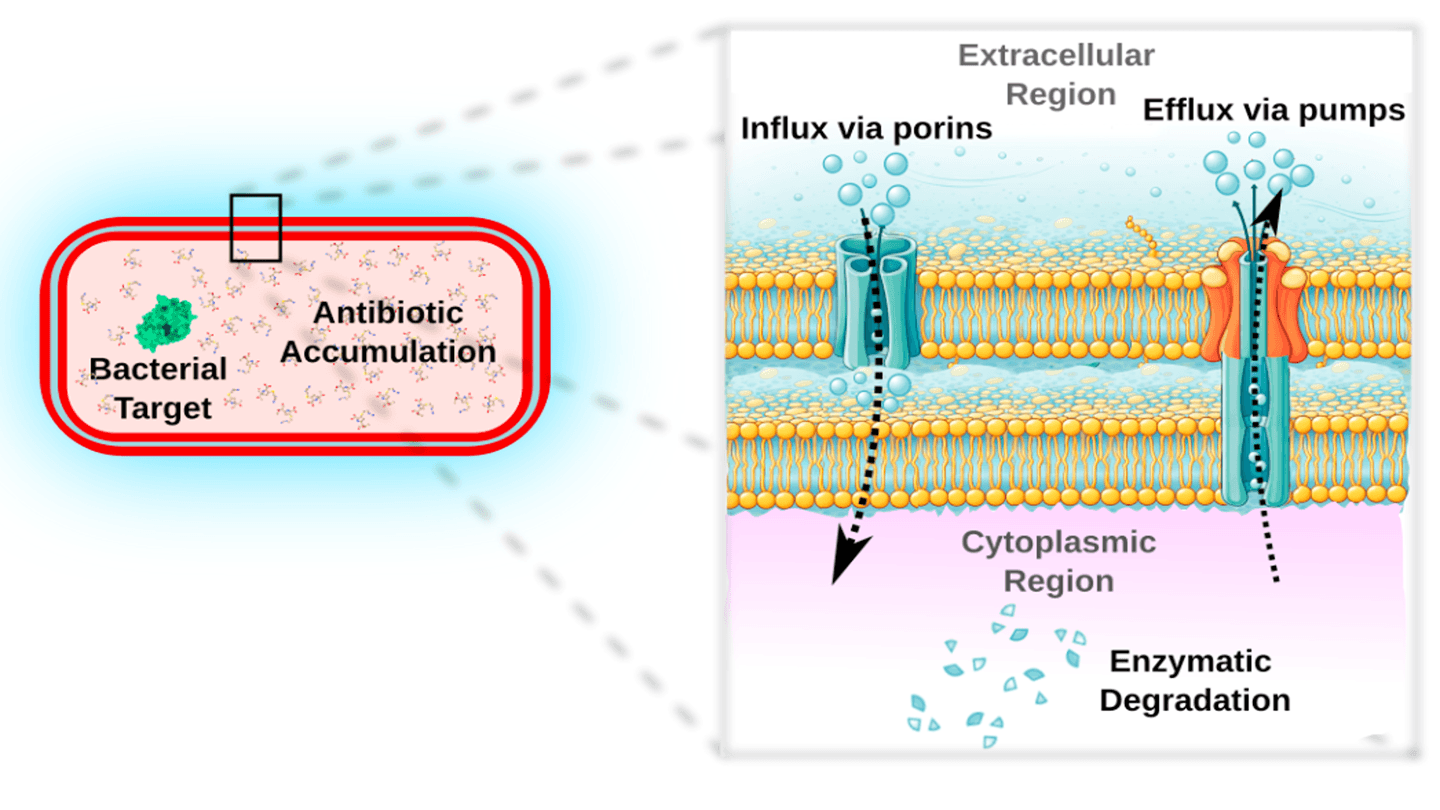
- Gram-negative bacteria have a highly selective outer membrane; most potent inhibitors fail due to poor accumulation.
- Accumulation (uptake, efflux, degradation) drives efficacy, yet most generative AI ignores these physicochemical entry rules.
The Solution
- Generative AI model for designing antibiotic analogues with built-in Gram-negative bacterial uptake.
- Structured State Space Sequence (S4) SMILES model — favorable scaling for long-range chemical dependencies.
- Delivers synthesizable scaffold variants with structural features for efficient transport and target engagement.
Core innovations:
- S4 pretraining: 1.9M bioactive molecules provide a broad chemistry prior over drug-like space.
- β-lactam fine-tuning: Penicillins, cephalosporins, and carbapenems focus the model on proven scaffolds.
- E. coli uptake bias: Experimental accumulation dataset pushes candidates toward the physicochemical entry rules.
Impact
- Pharma R&D: Focused libraries of antibiotic analogues with improved permeation properties.
- AMR response: New methodology against Gram-negative pathogens, where few antibiotics remain effective.
- Generative chemistry: Blueprint for biasing generative models toward physicochemical/biological constraints (uptake, synthesizability).
Industrial Directions
- Pharmaceutical R&D and antibiotic discovery pipelines.
- Antimicrobial resistance (AMR) research and public health.
- Generative chemistry and AI-driven drug design platforms.
- Biotechnology, Chemical Industry, Drug Discovery, Healthcare, Pharmaceuticals