The challenge
- Capturing accurate muscle activation in real time remains challenging without cumbersome electrodes or wired systems.
- Traditional EMG methods are intrusive, uncomfortable, and disrupt movement – deterring adoption for training, rehabilitation, or ergonomic applications.
The Solution
Experimental implementation of a new class of wearable devices powered by advanced AI algorithms.
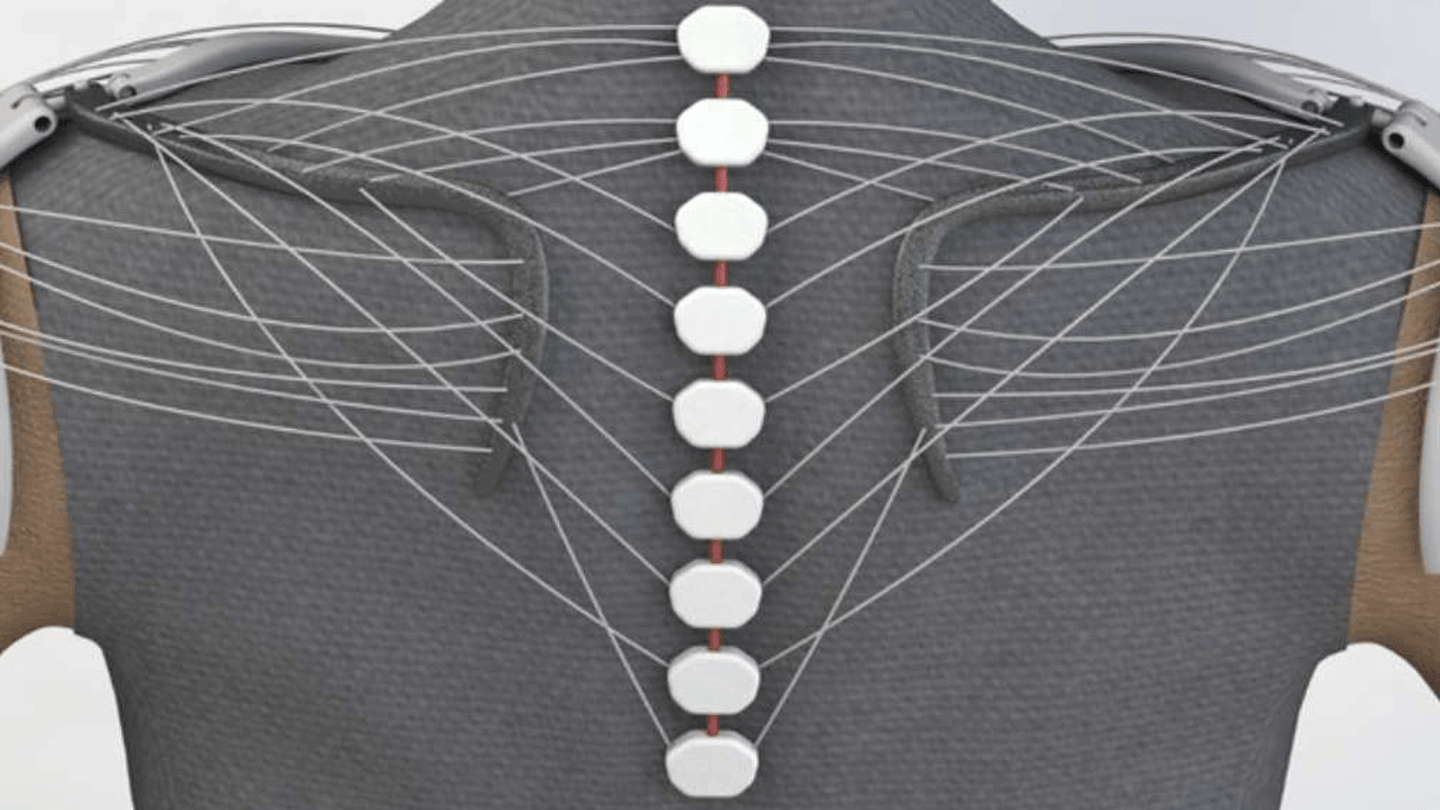
An integrated “smart” T-shirt was designed to noninvasively monitor, visualize, and correct human muscle activity using embedded EMG sensors and tactile feedback:
- Flexible garment embedded with dry EMG electrodes tracks muscle workload during physical activity.
- A wireless module captures data and translates it into intuitive visual feedback using advanced AI algorithms
- Tactile actuators provide real-time haptic cues to guide the wearer’s movement toward a reference pattern.
This configuration enables immediate, embodied muscle correction without cumbersome external devices.
Impact
Capturing accurate muscle activation in real time remains challenging without cumbersome electrodes or wired systems.
Traditional EMG methods are intrusive, uncomfortable, and disrupt movement – deterring adoption for training, rehabilitation, or ergonomic applications.
- Enhances rehabilitation outcomes through precise muscle workload insight
- Enables athletes to fine-tune performance with real-time feedback
- Supports ergonomic assessments and corrective interventions in daily life
Industrial Directions
Applications span healthcare, sports, and workplace wellness sectors:
- Physical therapy clinics and rehabilitation centres for targeted muscle retraining
- Professional sports teams and fitness studios focusing on performance and injury prevention
- Occupational health programs aiming to reduce musculoskeletal strain and improve employee well-being
- Digital Health, Fitness, Healthcare, Human Performance & Workplace, Occupational Health, Rehabilitation, Sports, Wearable Technology, Wellness