The challenge
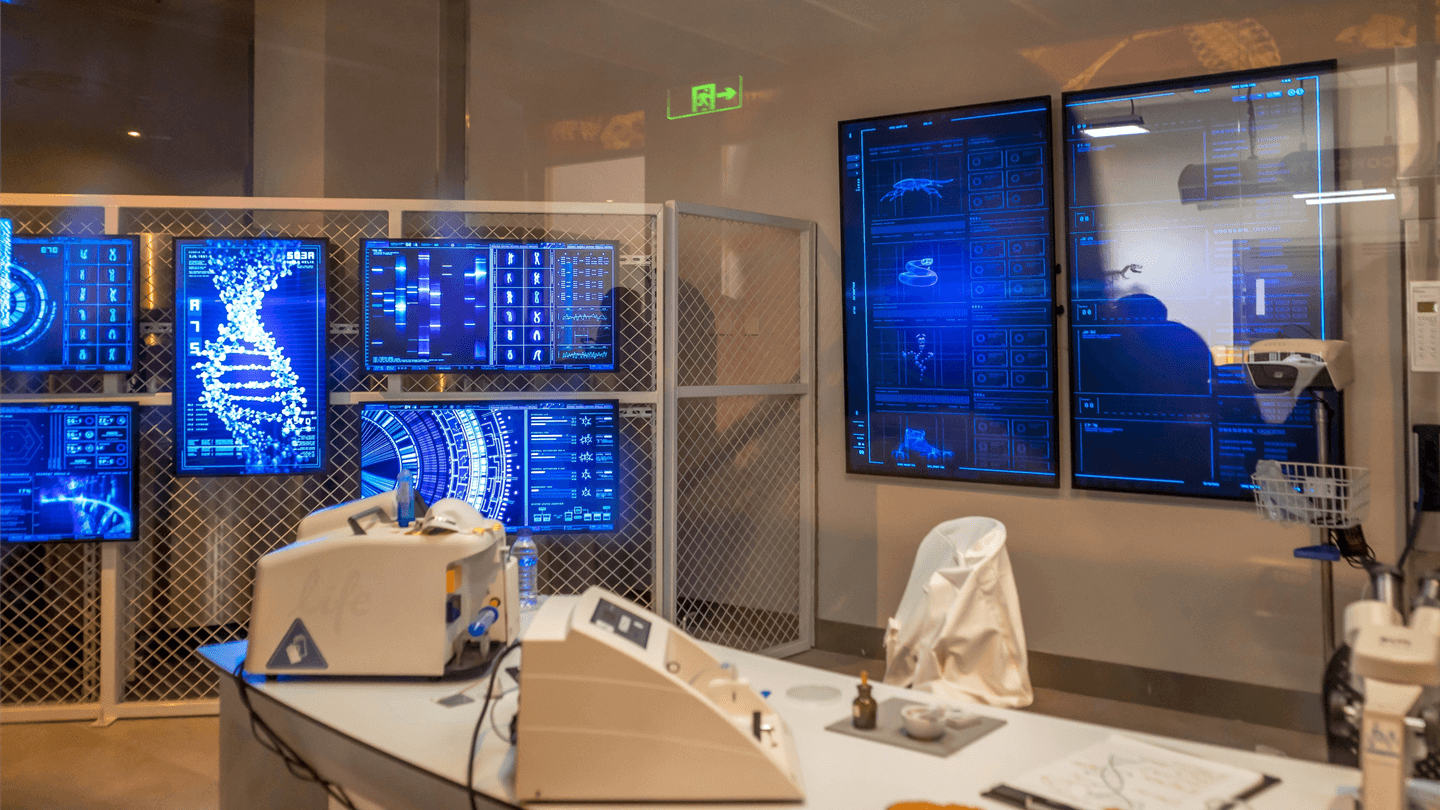
- Wet-lab protein engineering and characterization, generates large volumes of complex biophysical assay data that are difficult to interpret rapidly and consistently.
- Researchers spend significant time on repetitive analysis, experimental planning, and integration of heterogeneous datasets.
Current workflows lack a continuous feedback loop between:
- experimental instruments,
- computational bioinformatics models,
- and scientific decision-making.
The Solution
An autonomous AI-assisted research framework that combines:
- LLM-based AI Agents for reasoning, orchestration, and transparent
decision support. - MCP-enabled modular tools for standardized interaction with instruments, datasets, and models.
- Virtual Experiment Engine with Advanced Bioinformatics models for in silico simulations and predictions.
Impact
- Accelerates life science research cycles.
- Reduces manual data interpretation workload for scientists.
- Enables continuous human–AI collaboration in wet-lab environments.
- Improves experiment prioritization through autonomous in silico experiments.
- Increases reproducibility, transparency, and scalability of research workflows.
Industrial Directions
Near-Term Applications
- Protein thermostabilization
- Enzyme engineering
- Antibody design
- High-throughput ligand screening
- Artificial Intelligence, Biotechnology, Data & Analytics, Digital Health, Drug Discovery, Healthcare, Laboratory Automation, Pharmaceuticals, Research & Development, Scientific Computing, Scientific Instrumentation