The challenge
Robotic mobility in uneven terrain remains a major bottleneck. Current platforms struggle with transparency, adaptability, and cost efficiency. A core challenge lies in mapping, situational analysis, and decision making – fundamental for all moving robots.
- Managing elevation changes such as stairs and steep slopes
- Limited autonomy in cluttered, dynamic environments
- Need for advanced software for fully autonomous navigation
- High vehicle cost, while modular robotic dog components offer safer, affordable alternatives
Key objective: development of next-generation autonomous driving systems.
The Solution
This robotic dog is engineered with a proprietary low-level control system, enabling full autonomy and adaptability as a modular solution.
It builds maps, avoids obstacles, and adjusts its walking/movement patterns on the fly using onboard sensing and computing resources.
- Autonomous mode that does not rely on external controllers
- Equipped with depth camera and external GPU for superior perception (as an option)
- Control algorithms tailor walking parameters to terrain and context
Impact
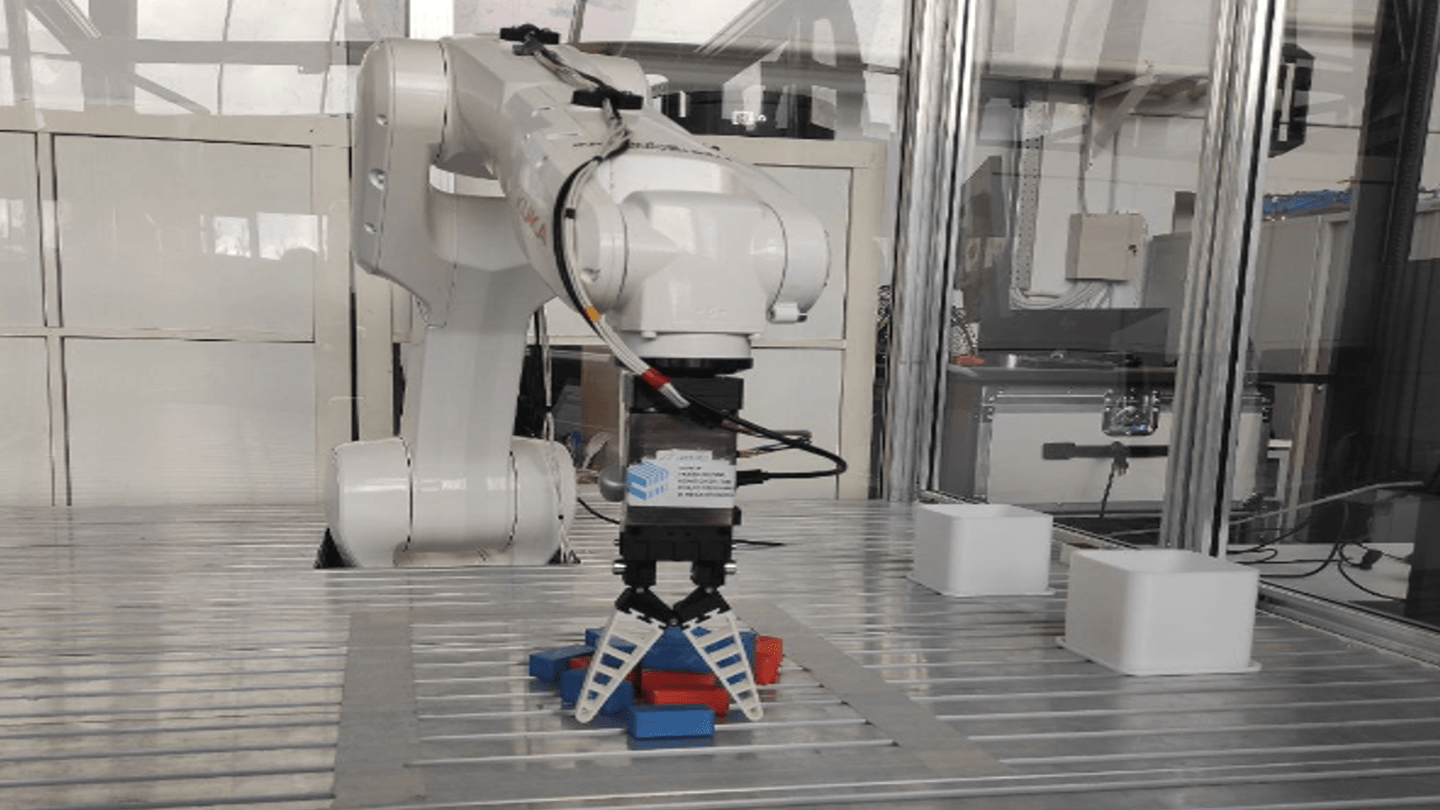
- Process acceleration delivers faster sorting and higher line throughput.
- Consistency keeps results stable across repeated production cycles.
- Error reduction cuts defects by replacing manual handling with automation.
- Operational flexibility allows seamless work with unordered and varied objects.
Industrial Directions
Deployed in:
- Logistics for moving goods across complex facilities
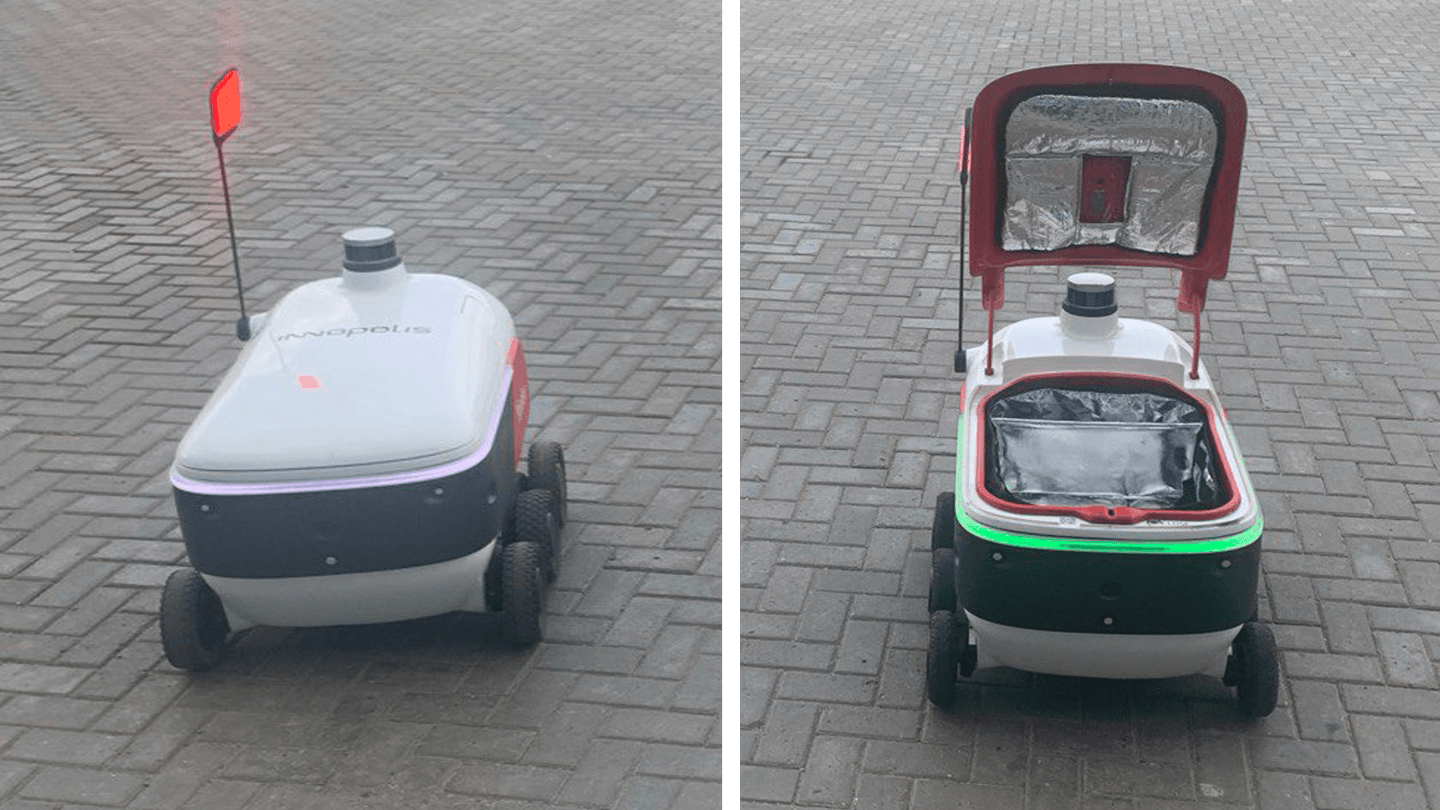
- Delivery robots for efficient service of various goods, including hot meals (industrial application)
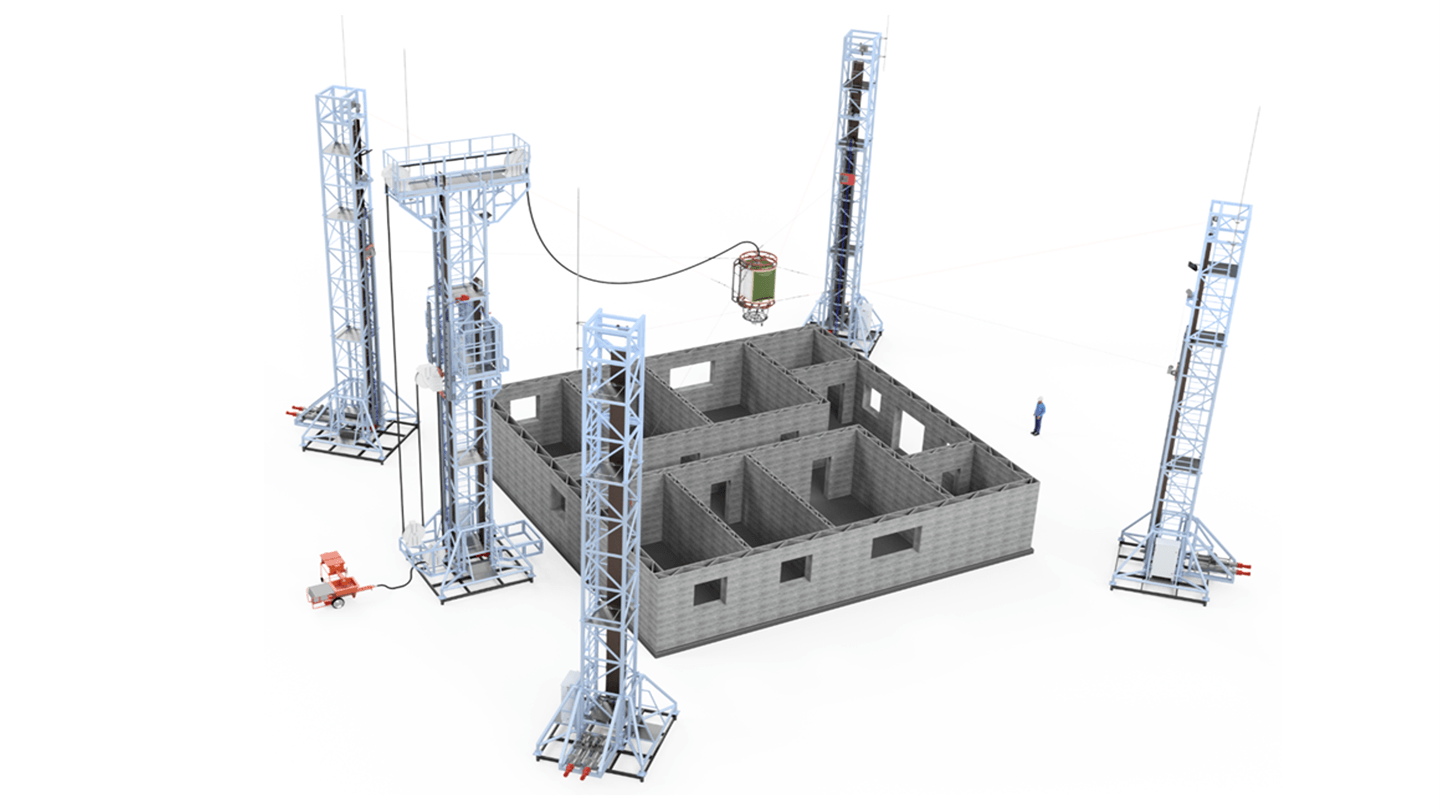
- Construction and mining for safe inspection of hard-to-reach sites
- Public safety for rapid response and rescue in dangerous terrain.
- Construction, Delivery, Industrial Automation, Inspection, Logistics & Supply Chain, Mining, Public Safety, Robotics, Smart Cities, Transportation