
Research Portfolio
Prof. Dr. Isak Frumin’s work at Constructor Labs connects research on education and learning, applied AI, large-scale knowledge processing, and organizational analysis. He leads two Constructor Labs projects in this area: “Emerging Demands and Innovative Practices in Use of AI in Higher Education and Science”, focused on AI adoption, early adopters, weak signals, and future demand in universities and research organizations; and “Platform for Collecting and Analyzing Web Texts for Social Science and Business Research”, focused on scalable web-data collection and text-analysis infrastructure for research and applied analytics.
His work in these areas is supported by international research collaborations and policy-oriented outputs. The KIHo! project, funded by the German Federal Ministry of Research, Technology, and Space, brings together Constructor University and the University of Göttingen to study GenAI adoption in higher education, with a comparative focus including India as an early adopter context. Prof. Frumin is also involved in SCIANCE, a Horizon Europe initiative supporting the development of the RAISE ecosystem for AI-enabled science, where Constructor University and Constructor Knowledge Labs contribute to work on research infrastructures, governance, and cooperation models.
In the EdTech domain, Prof. Frumin’s work focuses on how evidence about AI use in universities and research organizations can inform educational technologies and institutional change. His projects examine where new AI-enabled practices appear, which actors adopt them first, and how these developments affect teaching, administration, research workflows, and platform infrastructures. His EdTech contribution combines empirical monitoring, comparative analysis, and the translation of higher education research into actionable knowledge for universities, research organizations, and education technology teams.
Artificial Intelligence in Higher Education and Science
Investigates how universities and research organizations integrate AI
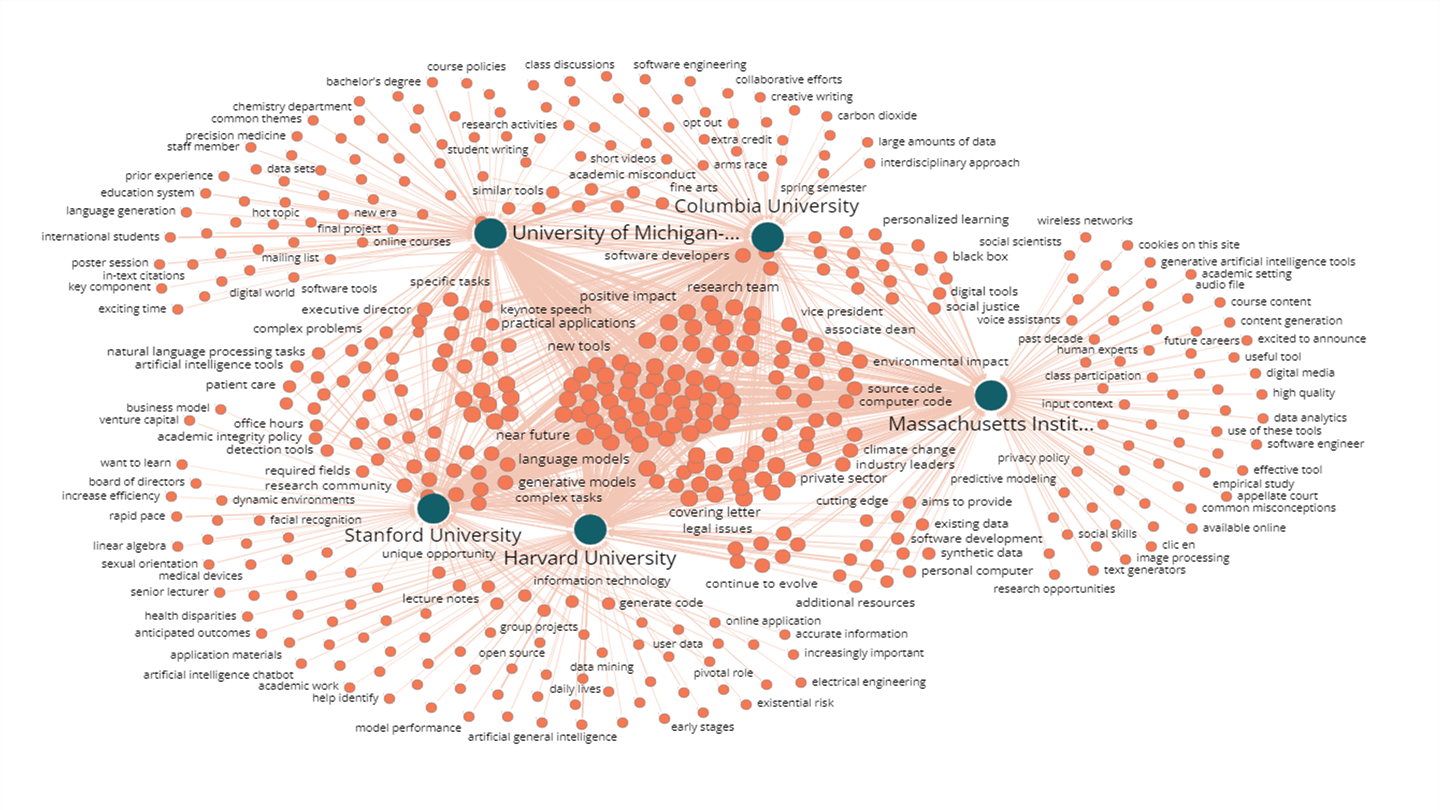
into teaching, administration, research workflows, and evaluation systems — and with what organizational and economic consequences. The research combines comparative institutional strategy analysis, systematic mapping of emerging AI tools
in practice, and studies of how AI reshapes the scientific process across disciplines.
- Typology of Architectures of Flexible Higher Education Curriculum | Voprosy obrazovaniya / Educational Studies Moscow
- Dobryakova, M., Froumin, I., Barannikov, K., Moss, G., Remorenko, I., Hautamäki, J. (eds) Key Competences and New Literacies. UNIPA Springer Series. Springer, Cham. 2023
- Chakseliani M., Fedyukin I., Froumin I. (Eds.) Research mission of teaching universities. Palgrave Macmillan. 2022
- Altbach Ph., Reisberg L., Salmi J., Froumin I. (Eds.) Accelerated Universities: Ideas and Money Combine to Build Academic Excellence. Brill-Sense Publ. 2018
- Carnoy M., Froumin I., Leshukov O., Marginson S. (Eds). Higher Education Governance in Federal Countries. Sage, 2018
- J. Huisman, A. Smolentseva, I. Froumin (Eds). 25 Years of Transformations of Higher Education Systems in Post-Soviet Countries. Reform and Continuity. Palgrave Macmillan, 2017
- Carnoy M., Loyalka P., Dobryakova M. S., Dossani R., Froumin I., Kuhns K., Tilak J. B., Rong W. University Expansion in a Changing Global Economy: Triumph of the BRICs?. Stanford : Stanford University, 2013
- How Сan Education Become the Driving Force of Socioeconomic Development? – ed. by Ya. Kuzminov, I. Froumin, and P. Sorokin, HSE University, 2022
- Russian Schools: the Early 21st Century – ed. by S. Kosaretsky and I. Froumin, HSE University, 2022
- Adult Education in Russia: Never Stop Learning – ed. by I. Korshunov and I. Froumin, HSE University, 2022
- Pausits, A., Frumin, I., Vorochkov, A., & Mostafa, O. (2025). Inventory of Higher Education Research Centers [Data Set]. DOOR, Universität für Weiterbildung Krems
- Frumin, I., Vorochkov, A., Kiryushina, M., Platonova, D., & Terentiev, E. (2025). Mapping the generative AI research education: 2022-2024 insights. Higher Education Quarterly, 79 (1)
- Pausits, A., & Frumin, I. (2025). How to Observe Changes in Higher Education? Introduction to the Annual Report of GOHEC. Journal of Research and Innovation in Higher Education, 6(1), 1-12
- Frumin, I., & Kalgin, A. (2025). Digital Transformation and Growth in Germany’s Private Higher Education. International Higher Education
- Xiao, J., Bozkurt, A., Nichols, M., Reinders, H., Tlili, A., & Burgos, D. (2025). Venturing into the unknown: Critical insights into grey areas and pioneering future directions in educational generative AI research. TechTrends, 69(5), 582–597
- Frumin, I., & Platonova, D. (2024). The socialist model of higher education: The dream faces reality. Daedalus, 153(2), 178–193
- Frumin, I. (2024). The cost to education development: A personal story. International Journal of Educational Development, 109, 103089
Publications on Scopus
- Mapping the Generative AI Research in Higher Education: 2022–2024 Insights
- Venturing into the Unknown: Critical Insights into Grey Areas and Pioneering Future Directions in Educational Generative AI Research
- The Manifesto for Teaching and Learning in a Time of Generative AI: A Critical Collective Stance to Better Navigate the Future
- A Missed Opportunity? The Transformation of the Teacher Salary System in Kazakhstan Amidst Rising Wages Упущенная возможность? Трансформация системы оплаты труда преподавателей в Казахстане в условиях роста заработной платы
- The cost to education development: A personal story
- Russia: The Rise of Research Universities
- Introduction
- Building Research Capacity at Universities: Imagining, Strategising, and Ordering
- Building Research Capacity at Universities: Insights from Post-Soviet Countries
Prof. Dr. Christoph Lattemann
Associate Professor of Business Administration and Information Management
Expertise spans digital transformation, information systems, innovation management, and the adoption of emerging technologies. Current work examines GenAI adoption, AI-enabled learning, and the organizational implications of integrating AI into university practices.
Dr. Daria Platonova
Research Analyst / Program Coordinator
Specializes in higher education governance, institutional performance, and university responses to policy and organizational change. Current work extends this expertise to AI in higher education and science, including the role of AI in research production and institutional transformation.
Kreesan Naicker
PhD student
Works at the intersection of AI, education, and innovation, with a particular interest in how new technologies spread through higher education. The PhD project compares organic and institutionally managed GenAI adoption in India and Germany, examining interactions between university strategies and bottom-up practices among staff and students.
Linda Peter
PhD student
Focuses on the institutional and economic dimensions of AI adoption in higher education. Current research compares South African and German universities, examining how AI enters institutional strategies, what resources are committed to implementation, and what patterns of costs, efficiencies, and value emerge.
Ekaterina Ziniukhina
PhD student
Brings experience in evidence-based education policy research and the digitalization of education. Current research investigates emerging AI technologies in higher education and science, using distributed digital evidence to identify early-stage developments, understand their potential implications, and examine the conditions shaping adoption and scaling.
Aleksandr Belikov
PhD student
Brings expertise in EdTech research, with a particular focus on AI technologies, their governance, and integration into education systems and institutional practices. The PhD project investigates how governments in developing countries translate AI and digital education strategies into practice, with particular attention to policy instruments and differences in the level of operational detail.
Shijie Liu
PhD student
Examines the relationship between AI-driven labour-market change and higher education adaptation. Current research traces how universities respond to emerging skill demands, how students adjust to those signals, and whether student responses subsequently contribute to institutional change.
Asif Shahriar
PhD student
Expertise centres on generative AI in education, including AI-supported learning design and institutional adoption. Current research develops design principles for GenAI governance in higher education, focusing on stakeholder needs, responsible use, and governance mechanisms adaptable across institutions, disciplines, and courses.
Mohammad Jamshidi
PhD student
Combines expertise in Retrieval-Augmented Generation and GenAI applications with a background in digital transformation management. Current research explores emerging AI developments relevant to higher education and science, with particular attention to early applications, their institutional relevance, and pathways from technical experimentation toward broader adoption.