
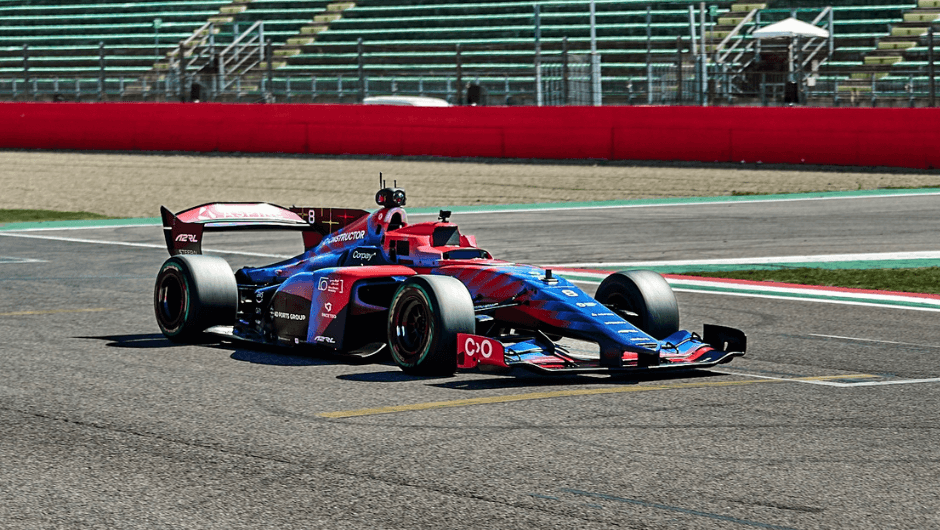
Two cars, one week at Yas Marina
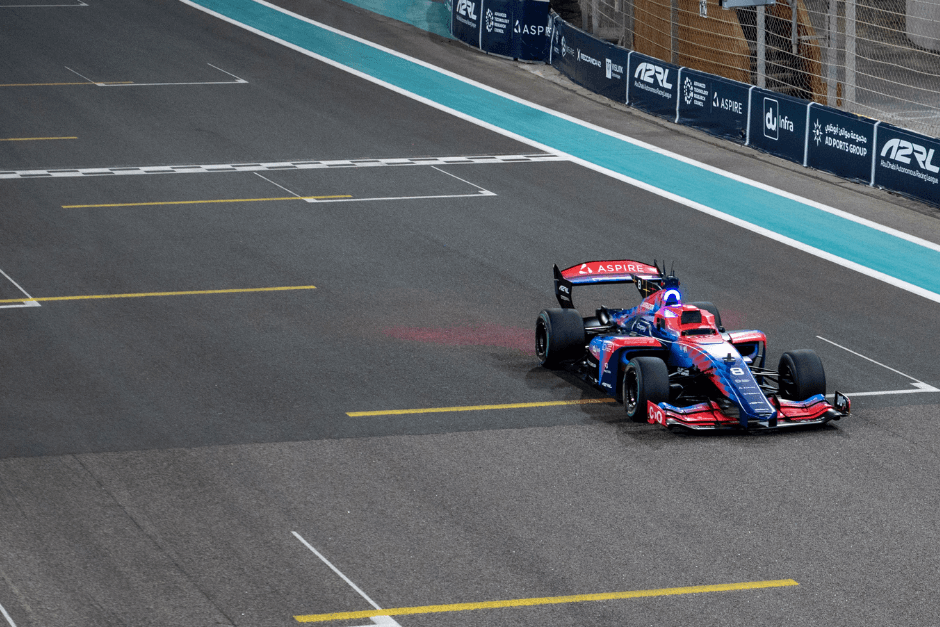
From 11 to 17 October 2026, Constructor racing team is back on track at Yas Marina Circuit in Abu Dhabi for A2RL testing – and for the first time, the team will run two autonomous race cars.
This week is not a race, and there is no competition on lap times. Much like pre-season testing in Formula 1, it is where teams take their systems onto a real circuit and push them: perception, planning and control, lap after lap. It is the behind-the-scenes side of autonomous racing, where the development work happens before the next competition.
Why two cars matter
Operating two cars on track is a first for the team. Not every team in the league is running two cars, and Constructor will use both from time to time during the week. It is a new step in how the team develops, runs and tests its software at full scale.
A race where the best code wins
In A2RL, every team gets an identical car. Nobody can change the engine, the aerodynamics or the mechanical setup. The only thing teams build is the software – the “AI driver”. So the best code wins, not the best car or the best human driver.
The car is a full-size race car fitted with 3 LiDARs (laser distance sensors), 4 radars and 7 cameras, plus GPS, motion sensors and wheel speed sensors.
Once the car is on track, nobody drives it. The team can only send high-level commands such as “go faster”, “slow down”, “yellow flag”, “no overtaking” or an emergency stop. Everything else is decided inside the car, which talks to the pit over 5G.
How the AI driver thinks
The software repeats one loop many times per second, and each pass has to finish faster than a human could react:
1. Perception: what is around me – other cars, obstacles?
2. Localization: where exactly am I on the track? At high speed a few centimetres matter, so the car fuses data from all its sensors into one precise estimate.
3. Planning: what should I do next? How to overtake, and when is the right moment?
4. Control: turning the plan into steering, throttle and brake, right at the limit of grip.
Before the car ever drives, the team calculates the ideal racing line for that car on that track, now done in the cloud with the team’s Global Trajectory Planner. On track, the car follows that line and leaves it only to overtake or avoid something.
And the data adds up fast: a single lap of roughly two minutes can produces close to 200 GB of raw data – about 1 GB per second.
Driving at the limit, for safer roads
Racing means driving right at the edge of grip and sometimes beyond it, where the tyres are just about to slide. Road cars almost never get there, except in an emergency, and that is exactly the moment safety systems have to get right. What the team learns at the limit feeds directly into crash-avoidance and driver-assistance technology.
Back at a familiar circuit
Yas Marina is no stranger to the Constructor racing team. In 2024, the team took a podium finish in the world’s first autonomous race on this very circuit. In 2025, it advanced to the Grand Final, competing at speeds above 250 km/h. In 2026, the team took part in A2RL’s first European race and once again secured a top-place finish. Now it returns to the circuit it knows best, this time to test, learn and push the car further.
From research to the race track
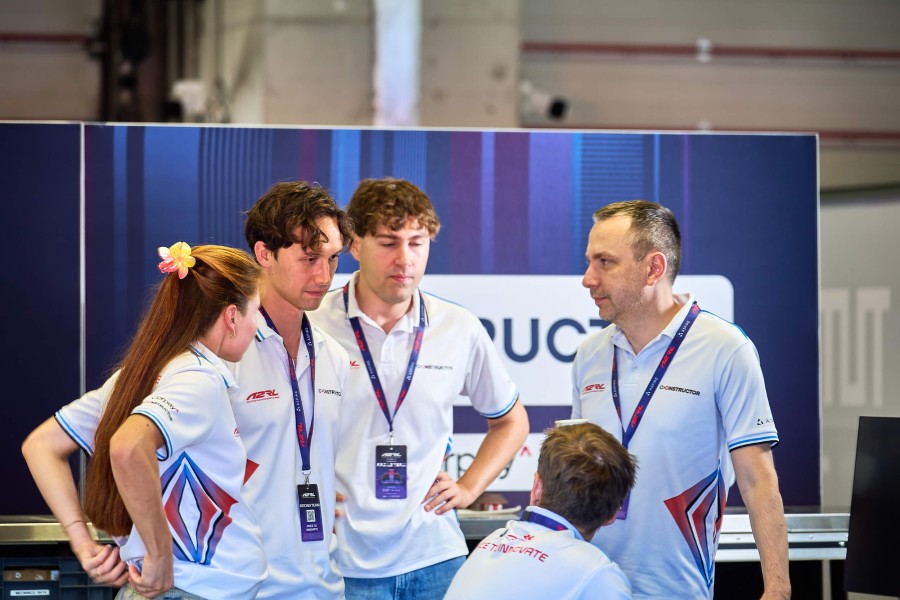
Constructor Autonomous is part of Constructor Labs, whose vision is industry-relevant research and the transfer of technology from research into real-world application – and autonomous racing is exactly that. The team brings together software engineers, developers, machine learning experts and mathematics specialists: Constructor’s own “tech athletes”, with contributions from Constructor University.